

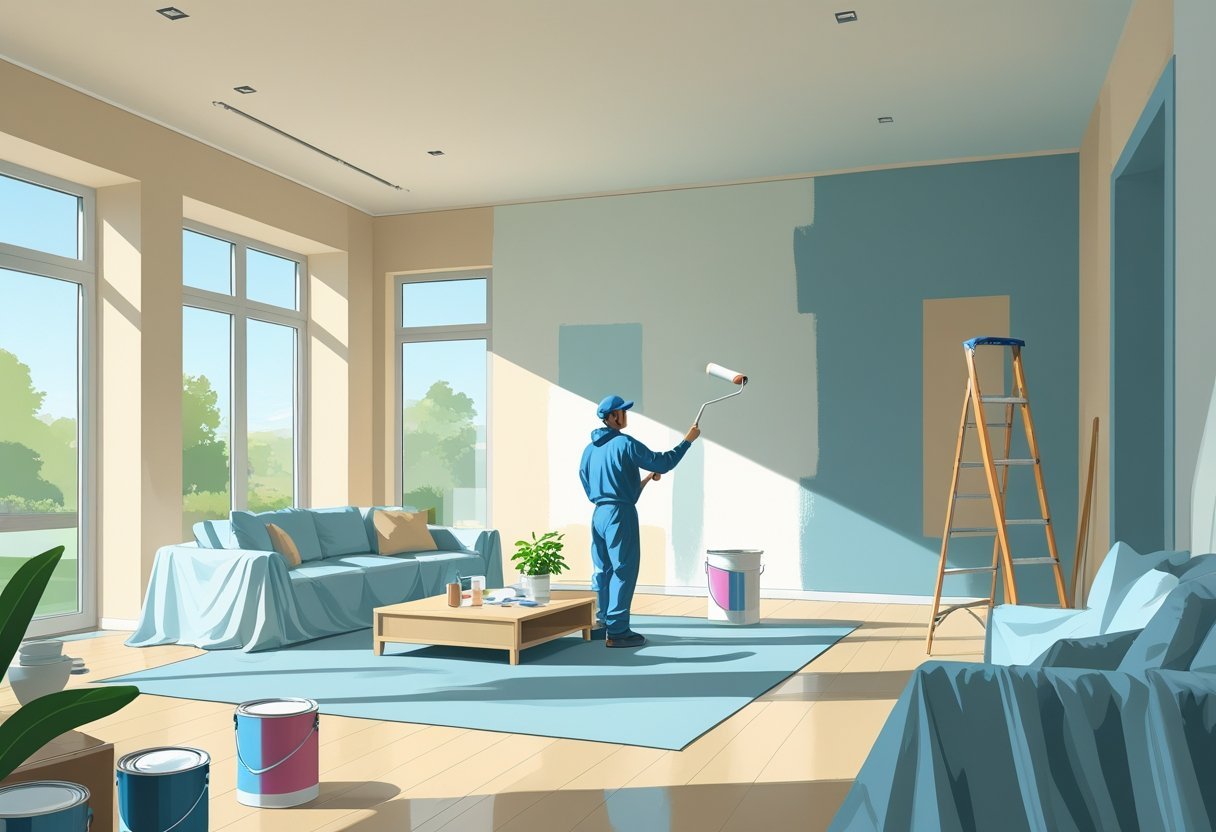
How much does it cost for painting interior of house, you can expect to pay about $2 to $6 per square foot to paint the interior of a house, with the national average near $2,000 for a typical home. That range covers most projects, but your final price will hinge on home size, paint quality, prep work, and whether you hire pros or do it yourself.
This post will help you figure out what drives those numbers and how to estimate your own cost. You’ll learn about average totals, how paint type and surface prep change the bill, when hiring a pro makes sense, and simple steps to calculate materials and labor for your project.
Average Cost to Paint Interior of a House
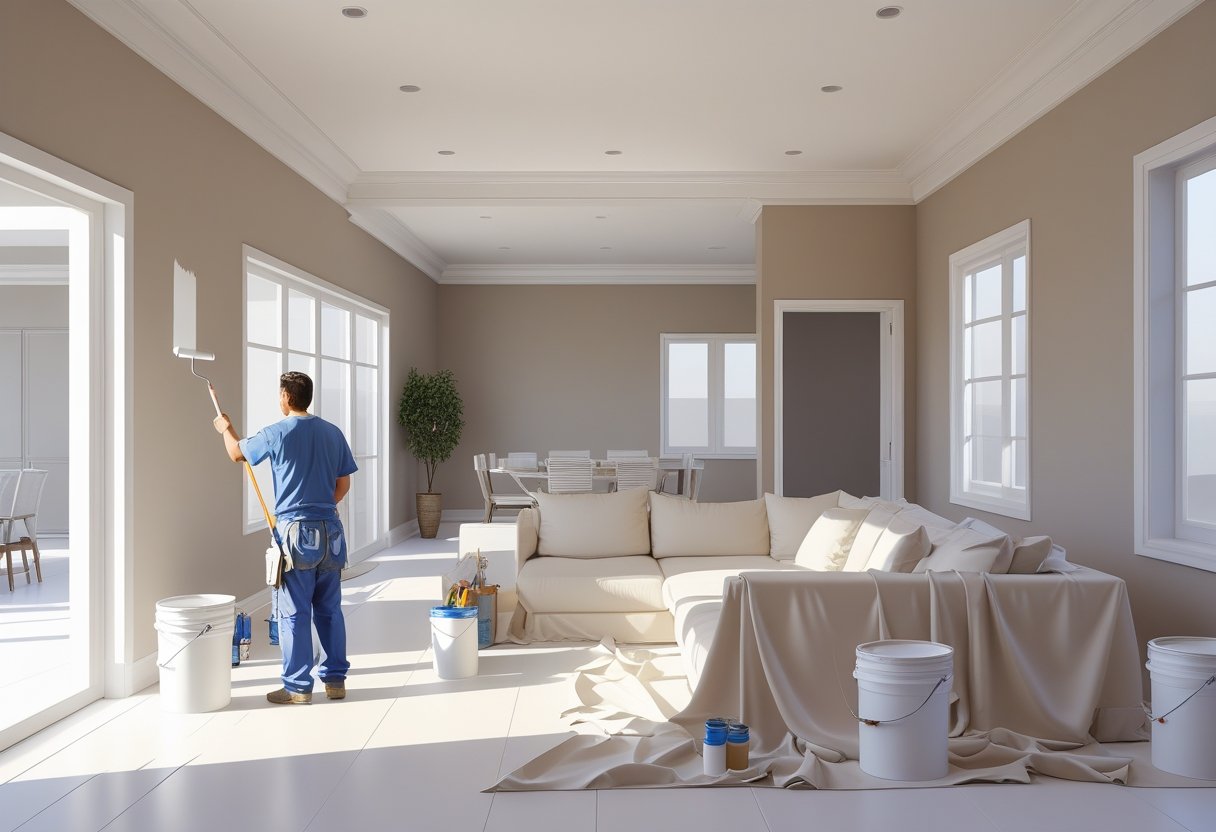
Expect price ranges that depend on square footage, room count, paint quality, and how much prep work you need. You’ll see per‑square‑foot rates and whole‑home versus single‑room estimates that help you budget for materials, labor, and extras like trim or ceilings.
National Average Price Range
Nationwide, interior painting projects typically fall between about $1,000 and $10,000 depending on size and scope.
Smaller jobs — a single bedroom or bathroom — often cost $150 to $1,000. Larger jobs — a full house interior — commonly range from $3,500 to $10,000. These figures include labor and basic materials.
Factors that push price up: high‑end paints, lots of trim, vaulted ceilings, or heavy surface repair. Factors that lower price: simple repainting with basic paint and minimal prep.
Get at least three written painting estimates to compare labor, included prep, and whether ceilings, baseboards, or doors are counted.
Cost Per Square Foot
You can expect pro painters to charge roughly $1 to $6 per square foot depending on region and services.
A common breakdown: $1–$3 per square foot for walls only, and $2–$6 per square foot when ceilings and trim are included.
Use this quick table to estimate:
- Walls only: $1.00–$2.00 / sq ft
- Walls + ceilings: $2.00–$4.00 / sq ft
- Full interior (walls, ceilings, trim): $3.00–$6.00 / sq ft
Remember to convert floor area to paintable surface area (multiply wall height by perimeter) for more accuracy. The painting cost calculator or a professional estimate will show paint needed, labor hours, and any added fees for texture or repairs.
Cost to Paint an Entire Home vs. Single Room
Painting one room usually costs $150 to $1,000. A typical 12′ x 12′ bedroom runs about $350–$850. That covers two coats on walls, minor patching, and basic trim work. DIY costs for the same room drop to $100–$300 for paint and supplies.
Painting an entire home scales up: a 1,500 sq ft house often costs $4,500–$6,000; a 2,500 sq ft house commonly runs $7,500–$10,000. Whole‑home jobs include more moving, masking, and likely multiple paint cans and ladder time, which raises labor costs.
If you want trim, doors, or cabinets painted, expect per‑linear‑foot or per‑fixture charges added to the base painting estimate.
Key Factors Affecting Interior Painting Cost
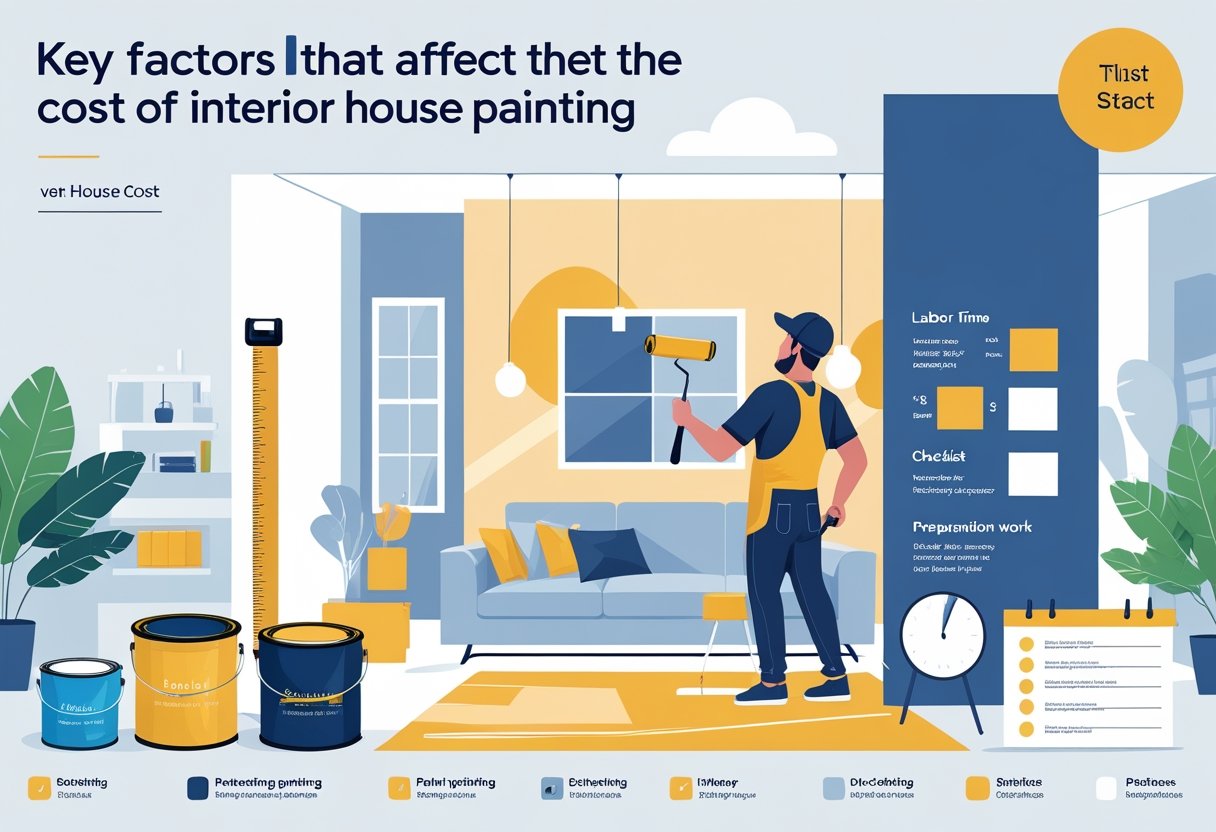
You’ll pay attention to how much space you have, the types of rooms, and the work your walls need. These items drive the painting estimate and explain why some rooms cost more per square foot.
Home Size and Layout
Larger homes raise the total price because painters charge by square foot and time. If your home is 2,000 sq ft of interior wall space, expect higher material use and longer labor hours than a 1,000 sq ft home. Open floor plans can reduce wasted time moving between rooms, but many rooms with doors and trim increase taping and cutting-in time.
Long hallways, high ceilings, or many windows change the cost per square foot. Rooms with 9–12 foot ceilings often require scaffolding or taller ladders, which adds to the painting cost estimate. Give painters an accurate square footage and a photo of each room to get a precise painting estimate.
Room Type and Features
Kitchens, bathrooms, and rooms with built-ins cost more to paint than bedrooms and living rooms. Kitchens need careful cutting around cabinets and appliances; bathrooms may require mold-resistant paint and extra prep for humidity. Bedrooms and living areas are simpler and usually lower in room painting cost.
Trim, crown molding, and multiple colors raise labor time and the final bill. If you want an accent wall or high-gloss trim, expect the cost per square foot to climb. Tell your painter which features you want painted so the estimate reflects detailed work and any specialty paint you choose.
Wall and Surface Preparation
Surface condition strongly affects your painting cost estimate. Smooth, recently drywall-finished walls need less prep and lower costs per square foot. Walls with holes, peeling paint, water stains, or wallpaper require patching, sanding, priming, or full removal — each task adds labor and materials.
Priming can be required when changing from dark to light colors or when stains exist; that raises the job total but saves repainting later. Ask for a line item for prep work in your painting estimate so you see costs for drywall repair, primer, and texture work separately.
Paint Types, Quality, and Their Impact on Cost
Your choice of paint and finish directly affects how much you pay now and how often you’ll repaint later. Higher-quality paints cost more per gallon but often need fewer coats, resist stains, and last longer on walls with heavy use.
Standard Paints and Finishes
Standard interior paints include flat, eggshell, satin, and semi-gloss. Flat paint hides imperfections and costs least per gallon, but it cleans poorly and is best for low-traffic rooms like bedrooms. Satin and semi-gloss cost more and resist scrubbing, so they work well in kitchens, bathrooms, and trim.
Latex (water-based) is the common standard choice. It dries fast, has low odor, and cleans with soap and water. Oil-based paints cost more, take longer to dry, and need solvents for cleanup, but they create a smoother, tougher finish on trim and doors.
Expect to pay roughly $20–$60 per gallon for standard options, depending on brand and finish. Budget for extra coats on dark or porous surfaces; that increases both paint and labor costs.
Premium and Specialty Paints
Premium paints run about $50–$80 per gallon. They include higher pigment load and better binders, so one coat often covers where cheaper paint needs two. That lowers labor time and can reduce total project cost despite a higher upfront price.
Specialty paints include moisture-resistant formulas for bathrooms, stain-blocking types for smoke or water stains, and low-VOC or zero-VOC paints for indoor air quality. These specialty options cost more but prevent problems that lead to earlier repainting or repairs.
If you need mildew resistance or heavy cleanup ability in high-use areas, choose a premium satin with moisture-resistant additives. For trim and cabinetry, a premium oil-based or conversion varnish gives longer wear and fewer touch-ups.
Primer and Paint-and-Primer Options
Primer adds a predictable base, improves adhesion, and blocks stains. A dedicated stain-blocking primer costs about $15–$30 per gallon extra but can save money by preventing bleed-through and reducing the number of finish coats needed.
Paint-and-primer-in-one (P&P) products cut steps by combining base and color coat. They work well over existing similar colors or lightly stained walls. P&P typically costs more per gallon than basic paint but may lower labor if it reliably covers in one coat.
For new drywall, heavy stains, or dramatic color changes, plan for a separate primer. For fresh paint jobs over like-for-like colors, a high-quality P&P can be a cost-efficient choice.
Labor Costs: Professional Painters vs. DIY
Labor is often the largest part of interior painting costs. You’ll decide between paying a pro for speed and finish, or doing the work yourself to save money but spend more time and effort.
Professional Painter Pricing
House Painters Markham professional painters usually charge by square foot, hour, or per room. Expect $1 to $3 per square foot for typical interior work, though rates can reach $3 to $5 for complex jobs or high-cost areas. For a standard 12×12 room, many painters quote a flat rate between $200 and $600, depending on prep needs and finish quality.
Labor makes up 70–85% of a pro quote. That covers surface prep, primer, multiple paint coats, cleanup, and warranty on workmanship. Ask for a written estimate listing labor hours, materials included, and extra charges (high ceilings, trim, repairs). Getting three bids helps you compare prices and services.
DIY Interior Painting Expenses
If you paint yourself, you’ll save on labor but still pay for materials and tools. Budget $30–$70 per gallon for mid to high-quality paint; one gallon covers about 300–400 sq ft. Expect supplies like brushes, rollers, tape, drop cloths, and trays to add $50–$200 for a single-room kit.
Factor extra costs for ladders, sandpaper, patching compounds, and possible paint waste from mistakes. Time is a cost: a DIYer might spend 8–15 hours on a typical room, more if you lack experience. If you value a flawless finish or must work quickly, DIY may not be the cheapest choice.
Pros and Cons of Professional vs. DIY
Professional painters give faster turnaround, more consistent results, and fewer mistakes. You pay more upfront, but labor warranties and expert prep can prevent costly touch-ups later. Pros also handle move furniture, do precise trim work, and manage complex surfaces.
DIY saves money on labor and lets you control color choices and schedule. You risk uneven coats, drips, and longer project time. If you already own tools and have painting experience, DIY can be cost-effective. If you need a high-quality finish or have limited time, hiring professionals often costs more but reduces hassle and rework.
Calculating and Estimating Your Painting Project
You will need to measure space, choose paint quality, and decide if you hire pros or DIY. These choices drive your paint estimator results, labor needs, and final painting cost estimate.
Using a Painting Cost Calculator
Use a painting cost calculator to turn room measurements into numbers fast. Enter room length, width, and height, and note doors and windows so you get accurate wall square footage. The tool will convert square feet to gallons using typical coverage (about 300–400 sq ft per gallon) and add primer if needed.
Choose the paint grade in the calculator—basic, premium, or specialty—so the estimate reflects real material costs. Also set the number of coats and whether ceilings and trim are included. A good paint estimator separates material and labor lines so you can see where savings matter.
Remember calculators give ballpark figures. Use them to set a budget or compare bids, not as a final contract price.
Getting and Comparing Estimates
Ask at least three painters for a written painting estimate. Give each pro the same measurements, paint choices, and prep requirements so quotes match. Request itemized bids that show labor, paint, primer, patching, and extras like wallpaper removal or high ceilings.
Compare estimates line by line. Look at hourly vs. per-square-foot labor, brand and finish of paint, and included warranties. Beware low bids that omit prep or use cheap materials—those raise total cost later.
Schedule an on-site walk-through with each contractor. A pro who inspects walls, notes repairs, and explains timelines usually gives a more reliable painting cost estimate.
Tips to Reduce Your Interior Painting Expenses
Do basic prep yourself to lower labor on the painting estimate. Move furniture, remove switch plates, and clear wall hangings so the crew starts faster. Small repairs like filling nail holes can also cut costs if you do them before the pros arrive.
Pick a durable mid-grade paint rather than the cheapest option; it often needs fewer coats and less touch-up. Request painters include a materials option in the bid—compare the cost difference between brands and finishes.
Bundle rooms with similar colors to avoid extra primer and coat changes. Finally, schedule work in shoulder seasons when demand drops; some contractors offer lower rates outside peak months.
Frequently Asked Questions
This section gives direct numbers you can use to plan. It covers per-square-foot rates, paint quality effects, extra costs, labor vs materials, room-size impacts, and ways to save money.
What are the average rates for professional interior painting services per square foot?
Expect typical rates of about CA$2 to CA$6 per square foot for complete interior jobs.
Use roughly CA$3–CA$4 per sq ft for a mid-range job as a quick estimate.
Lower rates (near CA$2/sq ft) usually cover walls only. Higher rates (CA$5–CA$6/sq ft) include ceilings, trim, and more prep.
How do price differences for various paint quality levels impact overall interior painting costs?
Budget paint costs less up front but often needs more coats, which raises labor and time.
Mid-range and premium paints cost more per gallon but can cut the number of coats and hold up better in high-traffic rooms.
If you choose premium paint for durability, expect material costs to rise but potential savings in fewer touch-ups over time.
What additional expenses should be considered when budgeting for an interior paint job?
Include primer, drywall repairs, caulking, and masking materials as common extras.
Expect separate charges for trim, doors, closets, and stairwells if not listed in the base quote.
Also add applicable sales taxes and any fees for high ceilings, scaffolding, or special finishes.
Can you provide a breakdown of labor costs versus material costs in interior painting?
Labor usually makes up the largest share of the bill.
Materials paint, primer, tape, and drop cloths often account for a smaller portion, though high-end paint raises that share.
As a rough guide, labor plus overhead can equal 70–80% of the total price, while materials sit around 20–30%, depending on paint choice and prep needs.
How do room sizes and configurations affect the total cost of painting a home’s interior?
Smaller rooms take more time per square foot because of extra cutting in around trim and fixtures.
Open-plan spaces are faster to cover, so your per-square-foot cost drops as room size grows.
Tall ceilings, stairwells, lots of doors or windows, and many small rooms all add hours and push the price higher.
What are some cost-saving tips when hiring a painter for interior work?
Do simple prep work yourself: move furniture, remove outlet covers, and clean walls to save labor time.
Limit the number of different colors and pick mid-range paint to balance cost and durability.
Ask for itemized quotes so you can compare prep, coats, and extras, and schedule work during slower seasons for better rates.
Related Posts

April 6, 2026
Step-by-Step Guide to Painting Your Home’s Interior
Refreshing your living space with a new coat of paint is one of the most…

March 30, 2026
Top Interior Paint Color Trends in Markham Homes
This article explores the latest interior house painting trends in Markham, providing homeowners with…

March 24, 2026
Room-by-Room Painting Guide for Markham Homeowners
Living in Markham, I recently had my home professionally painted, and the experience taught me…

March 16, 2026
Common Interior Painting Mistakes in Markham and How to Avoid Them
Painting your home can completely transform its look and feel. However, even small mistakes during…